


When patients come to see me because they are frustrated by heavy eyelids or dark shadows, they usually sum it up in a few simple words: "I just want to look less tired." But when we sit down together for a consultation, my job is to look beneath the surface to figure out exactly why those changes are happening. A natural-looking result relies entirely on understanding how your skin, muscles, fat, and bone structure work together.
If you are considering eyelid surgery, here is a transparent look at the four main things I evaluate during your appointment to ensure your result is both beautiful and entirely safe.
1. How the Lower Lid Meets the Cheek
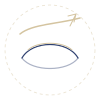
When assessing the lower eyelids, I look closely at the transition zone between your eyelid and your upper cheek. When we are younger, this area is smooth and flat. As time passes, the structural tissues holding everything in place can weaken. This allows the natural fat pads that cushion your eye to shift forward, creating what we commonly call under-eye bags.
During your consultation, I determine whether the shadows under your eyes are caused by these bulging fat pockets, actual structural hollows (tear troughs), or simple fluid retention. If displaced fat is the root cause, our surgical plan will focus on smoothing and repositioning that fat rather than simply pulling the skin tight, which can look unnatural.
2. Your Skin’s Elasticity and "Snap"
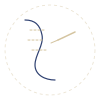
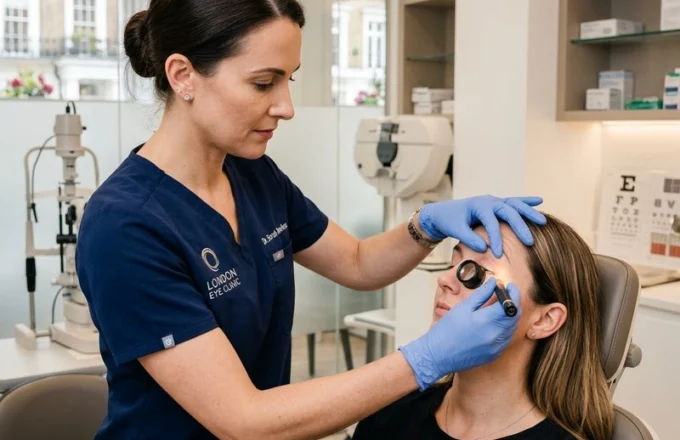
Not all skin bounces back the same way, and checking this is vital for a safe recovery. I perform a very gentle, quick test to see how elastic the skin on your lower lid is and how much natural support the underlying muscle has.
If your skin snaps back instantly, it tells me it will heal predictably. If it moves more slowly, I tailor the surgery to give the lower lid extra support so it stays perfectly in place as you heal. On the upper lids, measuring this skin laxity precisely ensures we only remove what is truly excess, lifting the lid without ever affecting your ability to close your eyes comfortably.
3. The Position of Your Brows
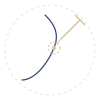
It is incredibly common for patients to visit the clinic thinking they need an upper blepharoplasty when the real issue is actually a heavy or drooping brow. Your brow acts as the anchor for your upper eyelid skin. If your brow has dropped over the years, it naturally pushes the forehead skin downward, making the eyelids look crowded and hooded.
By checking where your brow sits against your brow bone, I can tell you whether an upper eyelid surgery alone will give you the refreshed look you want, or if addressing the brow itself is the better approach.
4. Your Overall Eye Health and Dryness
A thorough cosmetic assessment should never ignore how your eyes actually function. I will always ask about your medical history, with a particular focus on whether you suffer from dry eyes.
Eyelid surgery can temporarily affect how often you blink during the first few weeks of recovery. Because of this, knowing your baseline tear production is essential. If you already have dry eyes, I adapt the surgical technique to be highly conservative, protecting your tear film and keeping your eyes comfortable throughout your recovery.
Every pair of eyes has its own unique structure. A detailed, one-on-one consultation is the only way to move away from guesswork and create a plan tailored specifically to your features.