






Let’s be honest: blepharoplasty is a heavy, clinical word. It sounds intimidating, slightly clinical, and completely disconnected from daily life. But behind the medical jargon is actually a very straightforward, elegant concept.
If you have ever caught your reflection and felt like your eyes looked permanently exhausted even after a fantastic night’s sleep and a stress-free weekend you are already familiar with what this procedure aims to address. Let’s take the clinical white coat off for a moment. I want to explain exactly what this procedure involves, how it works, and what the journey looks like, just as if we were discussing it over a coffee.
What Actually Is a Blepharoplasty?
At its core, a blepharoplasty is a precise surgical procedure designed to address excess skin and displaced fat pockets around the eyelids.
As the years pass, the delicate skin around our eyes naturally loses its bounce. It stretches, relaxes, and begins to fold over itself. For many people, the natural fat pads that cushion the eye can also begin to nudge forward. This creates those persistent bags under the eyes or heavy hoods over the upper lids. There comes a point where eye creams, chemical peels, and non-surgical treatments simply cannot lift what gravity has pulled down. When that happens, surgery is the only approach that can truly reset the area.
We generally look at it in two ways:
Upper Blepharoplasty: Removing the heavy hood of skin on your upper eyelid. This is the skin that can make your eyes feel physically heavy or tired by the end of a long day.
Lower Blepharoplasty: Addressing the puffiness, shadows, and tired-looking bags directly under the eye.
The Reality of the Procedure and Recovery
Because it is classified as surgery, it is easy to picture an intense, hours-long operation. The reality is much more straightforward.
The procedure itself is significantly shorter than most people expect. An upper blepharoplasty is frequently performed under a comfortable local anaesthetic, meaning you are fully awake but completely numb. The precise lifting and meticulous suturing usually take under an hour.
One of the most frequent questions I hear in my clinic is whether you will need to hide away at home for weeks on end. While everyone heals at their own pace, the vast majority of my patients are comfortably back to their work and light daily routines in around three to seven days.
However, I believe in absolute transparency over a glossy sales pitch. You will experience some localised swelling and mild bruising, which can easily look like dark circles or be covered with a light touch of concealer once the skin heals. I will always give you an honest appraisal of what your personal recovery window will look like before we ever book a treatment.
The One Rule I Never Break
While the physical surgery is efficient and the recovery is manageable, the part of the journey that should take the longest is your decision. And it absolutely should.
Your face is your identity. Deciding to refresh or alter any part of it is a significant emotional step. Because of that, this is the one single procedure where I strictly insist that you take your time.
I operate under a firm professional rule: I never, ever book a patient for surgery on the day we first meet.
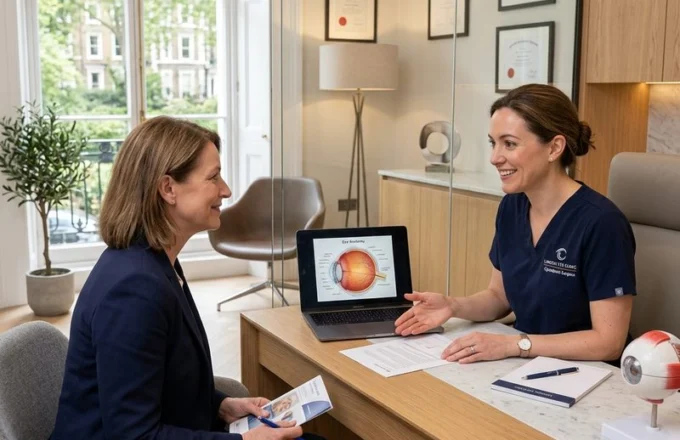
When you step into my clinic for the first time, our goal isn't to sign a contract or pick a date on a calendar. Our goal is to talk, look at your anatomy, and answer your questions. I want you to go home, sleep on it, talk it over with your loved ones, and let the information settle. A confident, successful outcome always starts with a completely unpressured mind.
Moving Past the Social Media Hype
If you open social media, you will see endless before-and-after photos, fast-paced videos, and smooth advertisements promising an instant, bright-eyed transformation. But social media is a digital billboard, not a medical reality.
Whether a blepharoplasty is right for you and more importantly, when the right time in your life is to do it is exactly what a clinical consultation is for. It requires a proper, detailed look at your unique features, an understanding of your day-to-day life, and an honest answer from a specialist who cares far more about your long-term well-being than simply booking another slot in the operating diary.
If you are tired of looking tired, let’s start with an open conversation. No pressure, no rushed timelines just an honest look at what is possible for you.